Replaying
The mind reviews the day, especially moments that felt unresolved or emotionally charged.
Sleep meditation for racing thoughts
If you are tired but cannot sleep, your body may be ready for bed while your mind is still processing the day. This guide explains racing thoughts at night, sleep meditation, deep sleep music, delta waves, binaural beats and simple audio choices from Space Before.

Start here
Press play, keep the volume low, and let the track become the focus instead of the thoughts.
Tired but can’t sleep
Feeling exhausted does not always mean the nervous system is ready for sleep. The body may want rest while the mind is still alert, evaluating, replaying, planning or reacting.
Common everyday causes include mental stimulation, work decisions, anticipation, late screens, irregular sleep times, caffeine, emotional conversations, a bright or noisy room, and trying too hard to force sleep.
Sleep difficulties can also have medical causes. If sleep problems persist, affect daily functioning or involve breathing issues, it is sensible to speak with a qualified professional.

Etsy download
A downloadable delta sleep meditation MP3 for people who want a simple deep sleep audio track away from the YouTube feed.
View on EtsyRacing thoughts at night
Thoughts often become louder when the day becomes quiet. Without external distraction, the mind can start replaying conversations, scanning unfinished tasks or imagining future problems.
The mind reviews the day, especially moments that felt unresolved or emotionally charged.
Tomorrow’s decisions, messages and tasks can feel urgent when there is nothing else to focus on.
Checking the time and worrying about not sleeping can create a feedback loop that keeps the mind alert.
Wind-down
Use a transition period. The aim is not to win a battle against thought, but to reduce stimulation and let attention soften.
Reduce stimulating work and content. Lower lights. Prepare the room. Write unfinished tasks down.
Use quiet ambient music, slow breathing or a guided sleep meditation. Let the mind decelerate gradually.
Choose silence, sleep music or a meditation. Keep volume low. Do not demand immediate sleep.
Avoid bright screens. Return to breath or audio. Restart a short meditation if it helps.
Guided sleep meditation
Sleep meditation uses voice, attention, breath, body awareness or imagery to help the mind move from alert thinking toward rest. Beginners can use it. You do not need to concentrate on every word.
It is normal to fall asleep during sleep meditation. In this context, that is usually the purpose, not a failure. If thoughts appear, notice them and return gently to the voice, sound or breath.
Sleep meditations
These Space Before meditations, deep sleep music tracks and sleep frequencies are here so visitors can move from reading into listening without feeling overloaded.
Rain sounds
 Delta waves
 Binaural beats
 Theta ambience
 Pure tone
 Insomnia support
Prefer a continuous run of tracks?
Open the sleep playlistBrainwaves and frequencies
Brainwaves describe broad patterns of electrical activity associated with different states. Beta is often linked with alert thinking, alpha with relaxed wakefulness, theta with drowsiness and imagery, and delta with deep sleep.
A brainwave frequency is not the same as an audible musical pitch. A 2 Hz or 4 Hz target is generally too low to hear as a normal note, so recordings use methods such as binaural beats, isochronic tones or pulsed sound.
Use careful expectations. Audio may support relaxation for some people, but it does not force the brain into sleep or cure insomnia.
Binaural beats and tones
Binaural beats use two slightly different tones, one in each ear, so headphones are usually required. Isochronic tones use a repeated pulse and do not rely on the same left-right headphone effect.
All-night listening
Some people like a timer; others prefer continuous background sound. If changing tracks wakes you, a timer or a stable long-form track may be better. Keep volume low and comfortable.
Affirmations, binaural beats and spoken audio can be too engaging for some people after sleep begins. Treat all-night audio as a preference to test gently, not a rule.
A continuous playlist for sleep, night waking and long background listening.
Open playlistWaking at night
Waking briefly can happen. The problem often starts when the mind treats waking as an emergency and begins calculating how much sleep is left.
Avoid bright screens and repeated clock checking when possible.
Use breath, a quiet sound or a short meditation as a simple point of return.
If you stay awake for a long time, a calm reset may work better than lying there in frustration.
Space Before sleep resources
Keep the choice small: listen, build your own sound, or ask about custom audio.
A continuous set of sleep music, delta waves and night-time audio.
Open playlistCreate a simple sleep sound with a timer, nature sounds, tones and saved presets.
View appCustom meditation, sleep music or bespoke sleep sound enquiries can be discussed directly.
Enquire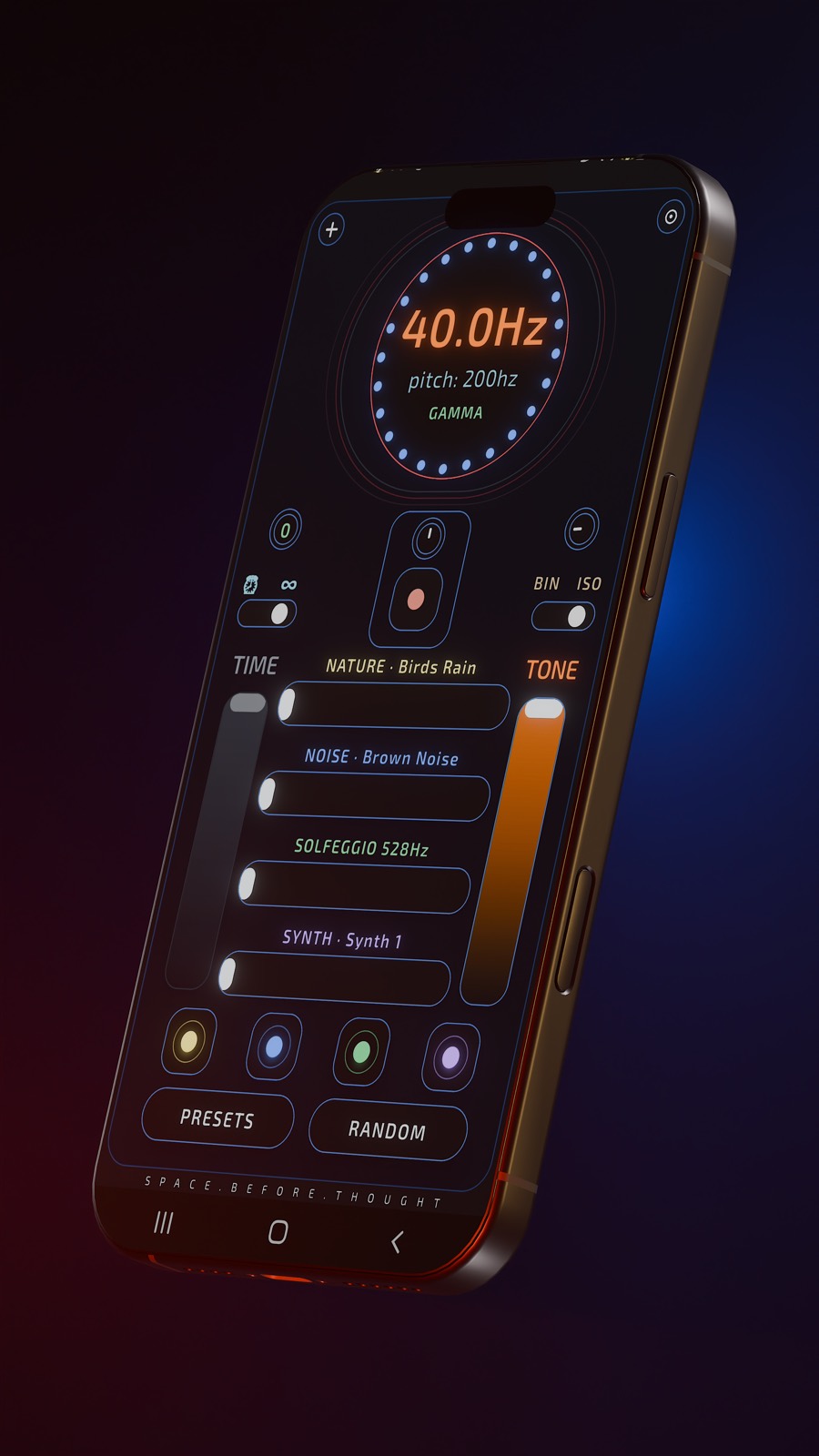
Meditation app
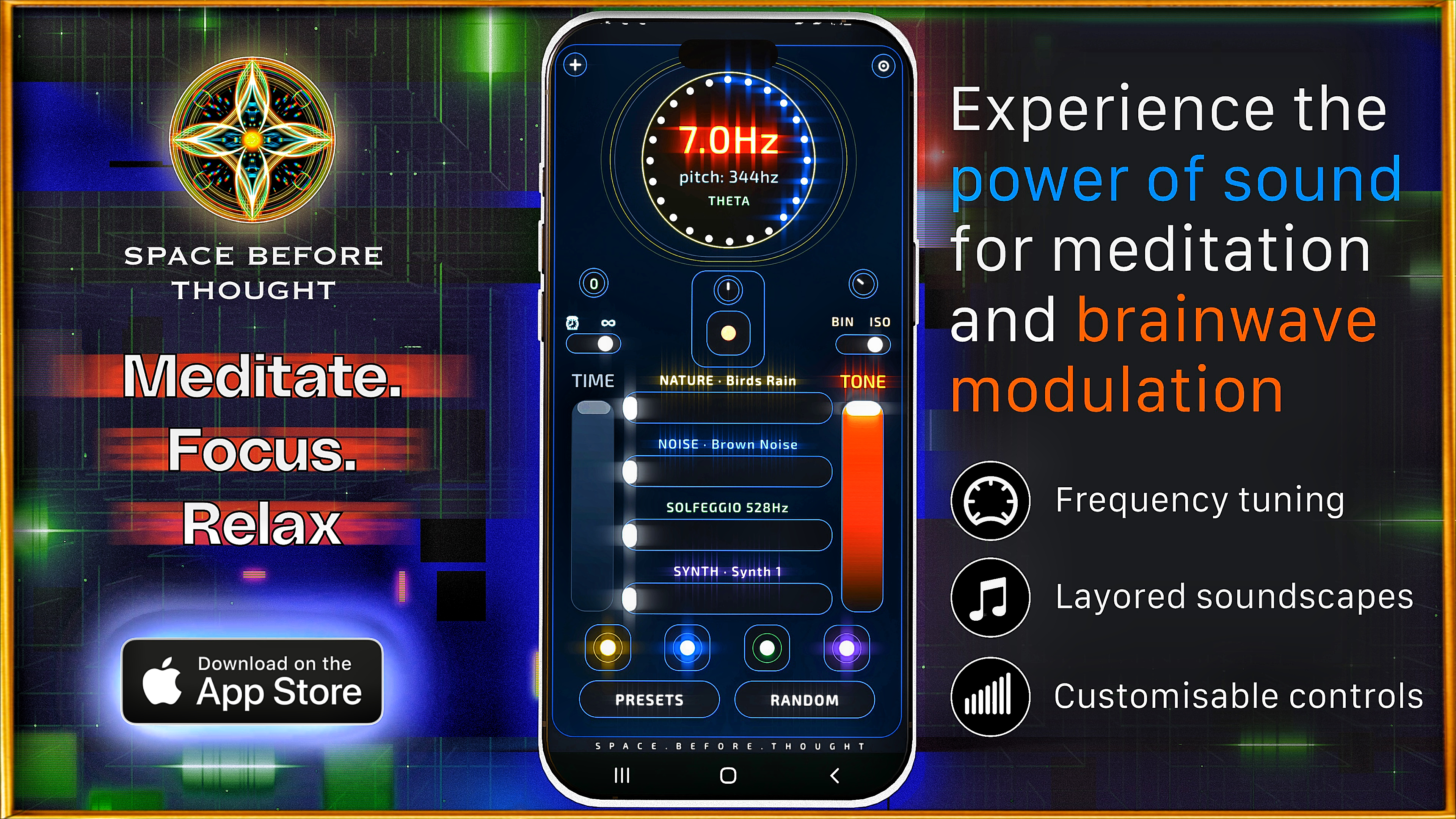
The Space Before app can be useful when you want a simple environment for sleep audio rather than another feed to scroll. Verified features include choosing brainwave frequency, binaural or isochronic audio, nature sounds or noise, a timer, personal affirmations, offline listening and saved presets.
It is not presented as a treatment for insomnia or any sleep disorder.
View the appSleep questions
Concise answers for common sleep meditation, sleep music, frequency and night-waking questions.
Your body may be tired while your mind is still alert from screens, work, caffeine, stress, unfinished tasks or worrying about sleep.
When external distractions stop, unfinished thoughts can become more noticeable.
Reduce stimulation, write down unfinished tasks, lower lights, use slow breathing and give the mind a transition period.
The best one is the one you can stop trying to perform. A calm guided meditation or simple body scan often works well.
Choose something steady and simple: rain sounds, a slow guided meditation, gentle ambient music or a frequency track that gives attention somewhere soft to rest.
Yes. In sleep meditation, falling asleep is usually the point.
Sleep music may support relaxation for some people, but it is not a cure for insomnia. If sleep problems persist or seriously affect daily life, speak with a qualified professional.
Delta-oriented recordings often reference low brainwave targets, but audio does not guarantee sleep.
Delta activity is associated with deep sleep, but listening to a delta recording is not the same as forcing deep sleep.
Theta is often associated with drowsiness and imagery, so some people use theta-oriented audio during wind-down.
Traditional binaural beats generally need headphones because each ear receives a different tone.
Yes, isochronic tones are pulsed tones and do not rely on the same left-right headphone effect.
Some people can; others prefer a timer. Keep volume low and comfortable.
Some people find brown noise soothing, especially for masking environmental noise. Others prefer silence or music.
It depends on the person and the room. Silence is best for some; sound is better for others.
Use a comfortable low volume, especially with headphones.
You can test it, but speech may keep some people mentally engaged. A timer may be better.
No. Meditation can support relaxation, but persistent or severe sleep problems deserve professional assessment.
When to get help
This page is educational and does not replace medical advice. Consider professional support if sleep problems continue for a long period, seriously affect daily functioning, involve breathing difficulties, severe distress, medication changes, another health condition or dangerous daytime sleepiness.
References: NHS insomnia guidance, CDC sleep guidance, WHO safe listening guidance.
Next step
Choose the sleep meditation, open the playlist, or create your own quiet sleep sound in the app. Keep it simple enough that you can stop managing the process.